
Calculators Mechanical
Audio Guide

|
|

|
|
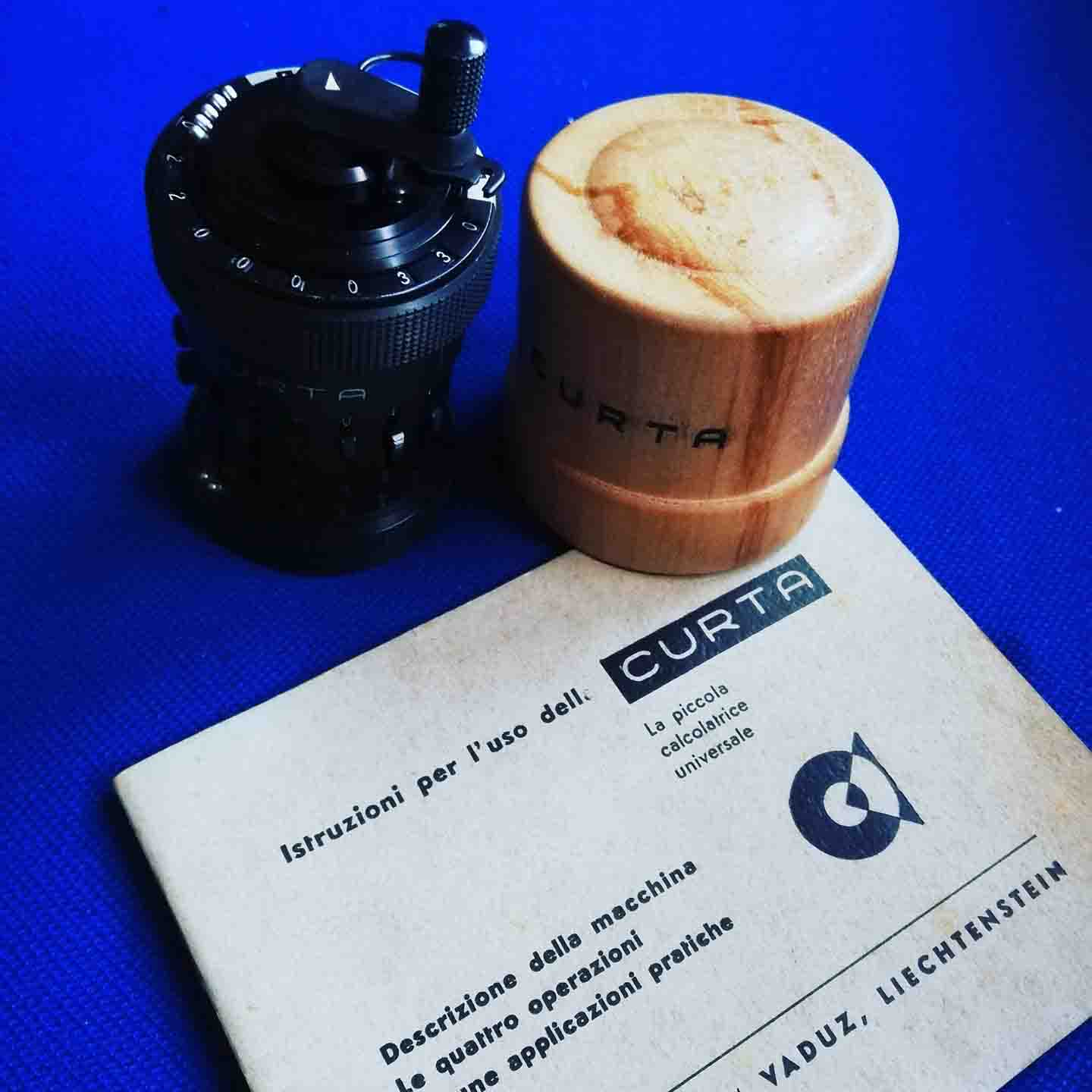
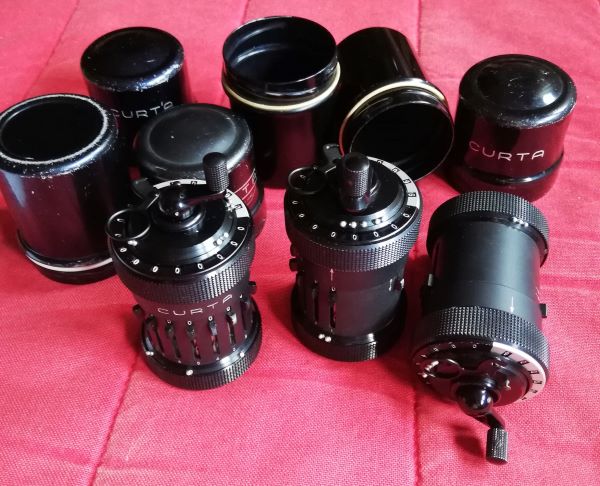 The Curta is a project of the Austrian engineer Curt Herzstark while he was imprisoned in the Buchenwald concentration camp.
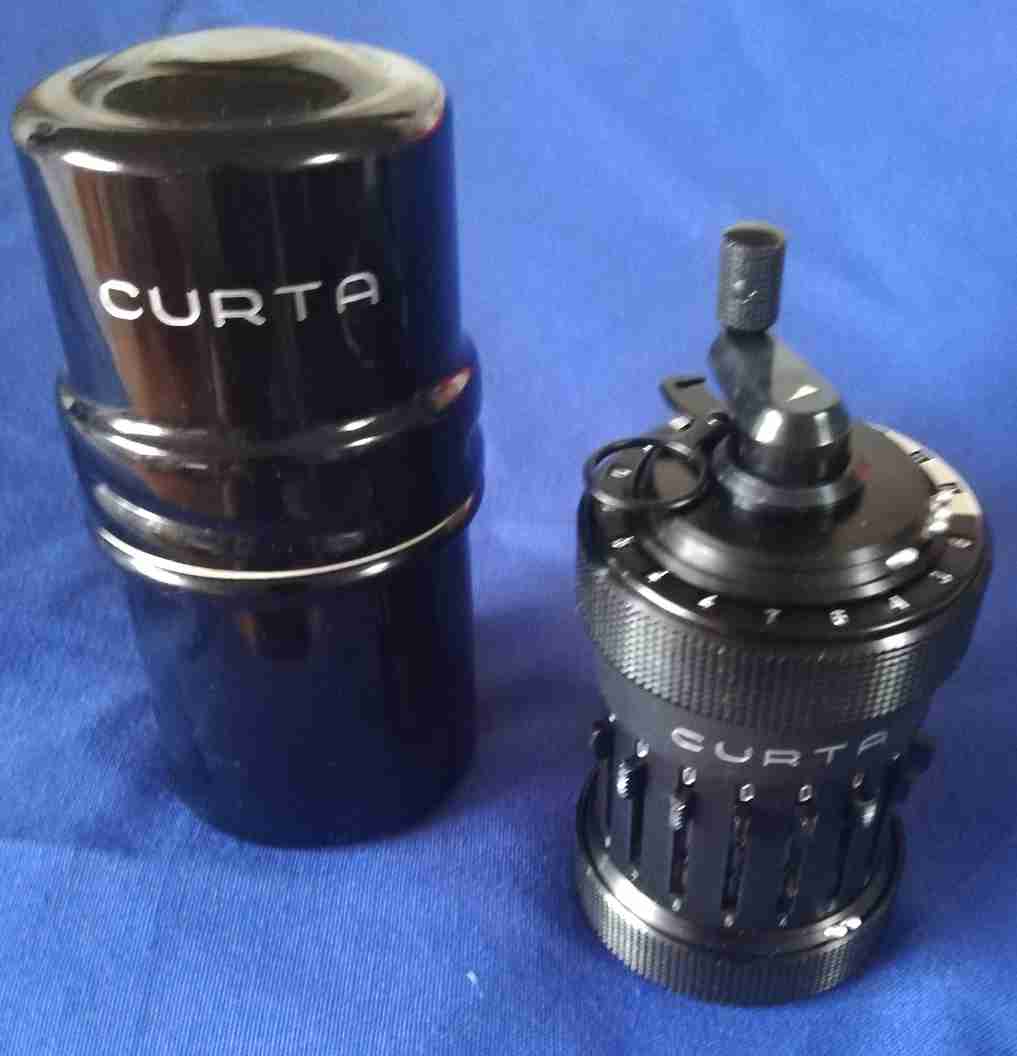
He had developed considerable experience with mechanical calculators from an early age, as his father had an office machine company, Austria. This produced calculators based, like the Curta later, on the Leibniz transposer.
Young Curt began designing his own calculator for his father's company. When he was interned, following the Nazi persecutions against the Jews, he was assigned to a "special" unit to be able to finish his invention, which the Nazis wanted to give to Hitler. His skill was such that, albeit in desperate conditions, he managed to resume and complete the project. After surviving the camp and the Second World War he was able to perfect and complete the project. Construction was entrusted to Contina Ltd Mauren in Liechtenstein.
It was considered the best portable calculator available until the advent of electronic calculators in the 1970s. A total of about 140,000 were produced, of which 80,000 type I and 60,000 type II. The last model left the factory in 1970. The selling price was $ 125 at the time.
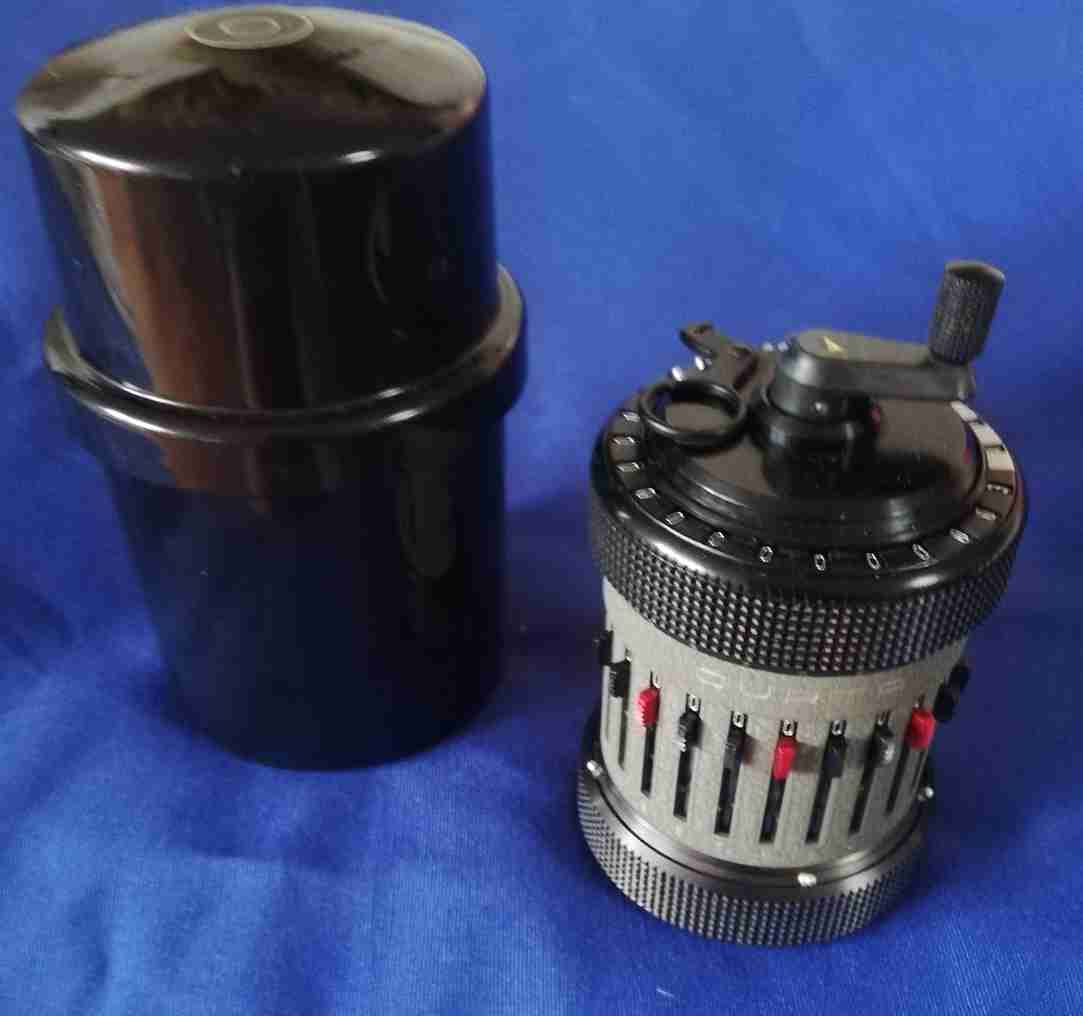
The two models, called type I (photo 1) and type II (photo 2), differ in the number of digits that can be processed. The first model accepts 8-digit numbers as input, has a 6-digit tachometer and an 11-digit totalizer, the second, slightly larger, has 11 cursors, an 8-digit revolution counter and 15 output digits .
The use of the Curta had a period of popularity in car rallies between the 1960s and 1980s.
Even after the advent of electronic calculators, the Curta continued to be used for calculations of speed, times and distances in races, thanks also to the greater robustness and reliability compared to the first electronic machines, and to the ability acquired by operators to enter digits. by touch alone.
.jpg) The Fuller calculator, sometimes called Fuller's cylindrical slide rule, is a cylindrical slide rule with a helical main scale taking 50 turns around the cylinder. This creates an instrument of considerable precision – it is equivalent to a traditional slide rule 25.40 metres (1,000 inches) long. It was invented in 1878 by George Fuller, professor of engineering at Queen's University Belfast, and despite its size and price it remained on the market for nearly a century because it outperformed nearly all other slide rules. As with other slide rules, the Fuller is limited to calculations based on multiplication and division with additional scales allowing for trigonometical and exponential functions. The mechanical calculators produced in the same era were generally restricted to addition and subtraction with only advanced versions, like the Arithmometer, able to multiply and divide. Even these advanced machines could not perform trigonometry or exponentiation and they were bigger, heavier and much more expensive than the Fuller. In the mid-twentieth century the handheld Curta mechanical calculator became available which also competed in convenience and price. However, for scientific calculations the Fuller remained viable until 1973 when it was made obsolete by the HP-35 handheld scientific electronic calculator.
The Fuller calculator, sometimes called Fuller's cylindrical slide rule, is a cylindrical slide rule with a helical main scale taking 50 turns around the cylinder. This creates an instrument of considerable precision – it is equivalent to a traditional slide rule 25.40 metres (1,000 inches) long. It was invented in 1878 by George Fuller, professor of engineering at Queen's University Belfast, and despite its size and price it remained on the market for nearly a century because it outperformed nearly all other slide rules. As with other slide rules, the Fuller is limited to calculations based on multiplication and division with additional scales allowing for trigonometical and exponential functions. The mechanical calculators produced in the same era were generally restricted to addition and subtraction with only advanced versions, like the Arithmometer, able to multiply and divide. Even these advanced machines could not perform trigonometry or exponentiation and they were bigger, heavier and much more expensive than the Fuller. In the mid-twentieth century the handheld Curta mechanical calculator became available which also competed in convenience and price. However, for scientific calculations the Fuller remained viable until 1973 when it was made obsolete by the HP-35 handheld scientific electronic calculator.
.jpg)
.jpg)
.jpg)
.jpg)
.jpg)
.jpg)

User Manual Wikipedia Stanley Fuller Calculator
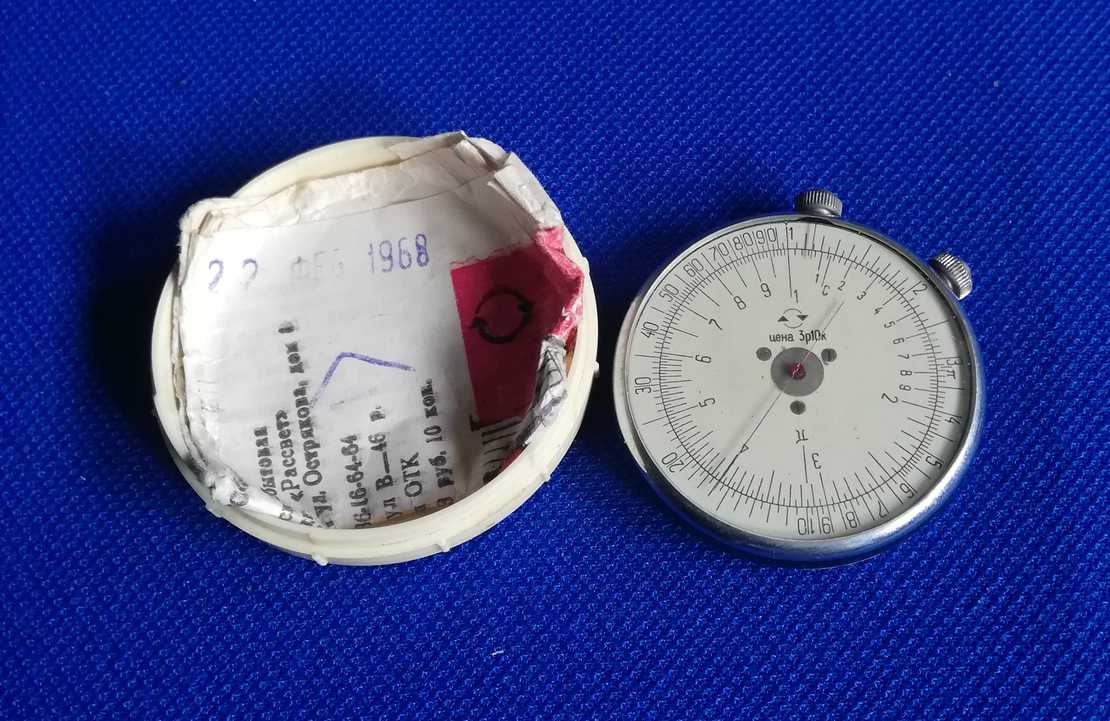
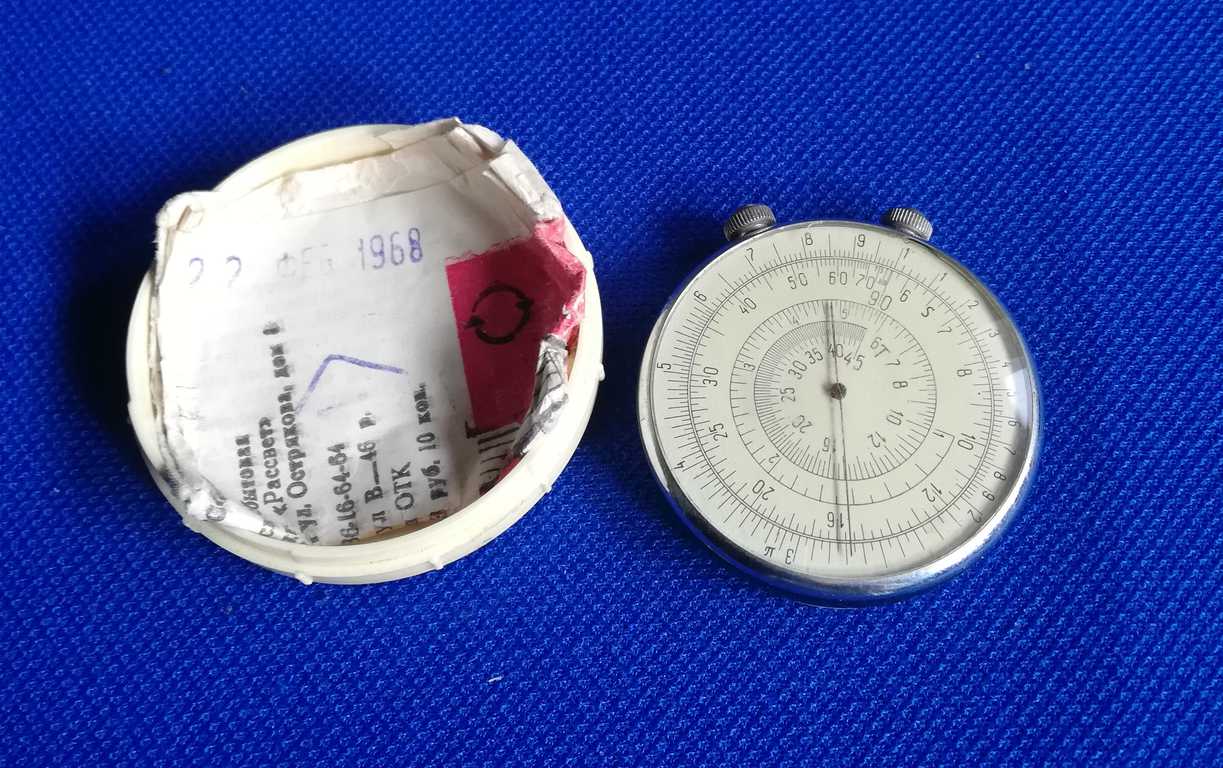 Technical Features
Manufacturer: Russian Year: c1968
Info: 50 millimeters in diameter, The KL-1 is intended for performing trigonometric and mathematical operations: Multiplication / Division / Squaring / Extraction of a square root / Finding of trigonometric functions of a sine / Finding of trigonometric functions of a tangent / Finding inverse trigonometric functions / Calculation of the area of a circle. Donated by Bohdan ( Богдан Ukraine )
.jpg)
.jpg) Technical Features
Technical Features
Manufacturer: Lagomarsino Year: 1958
Info: In the hands of an expert operator (comptometrist) these machines were extremely rapid in performing additions. In fact, all significant figures could be entered simultaneously, using both hands and without wasting time writing zeros.
.jpg)
.jpg)
.jpg)
Donated from Museo del calcolatore di Prato (Firenze) (R. Aliani / M. Belardi )
Museo del Calcolatore (PRATO) Lagomarsino
 Technical Features
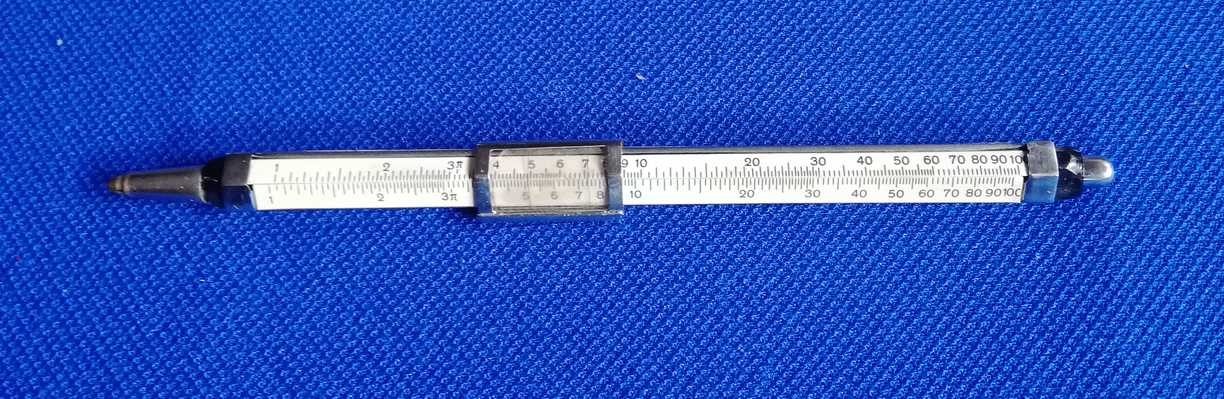
Manufacturer: Makeba Germany DDR Year: c1950
Info: This is the Makeba Kombinator, manufactured in Bautzen, Eastern Germany, in the 50’s or 60’s.This device has two 2-cycle scales and two 1-cycle scales, with one of each pair fixed to the hexagonal body of the pencil itself, and 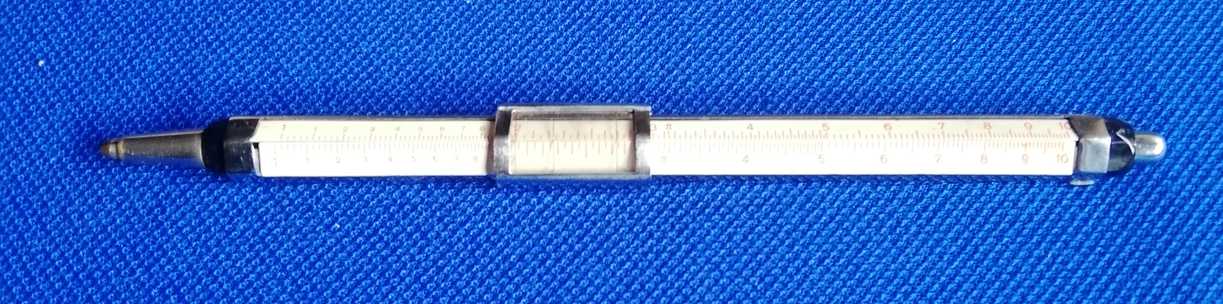 the others to an outer hexagonal metal tube that can slide out around the pencil, moving the scales relative to their twins. A metal-framed cursor slides along the entire device. The Kombinator is a precision product. It has engraved 5-inch scales that look good and stay accurate. The photo below shows how the C and D scales are set to perform multiplication by 2. Donated by Bohdan ( Богдан Ukraine )


.jpg "Core Module Watch")


.jpg "APPLE")

.jpg "Console / Games")
.jpg "Olivetti Valentine")
.jpg "Battle Star Galactica")


.png)