




Sinclair
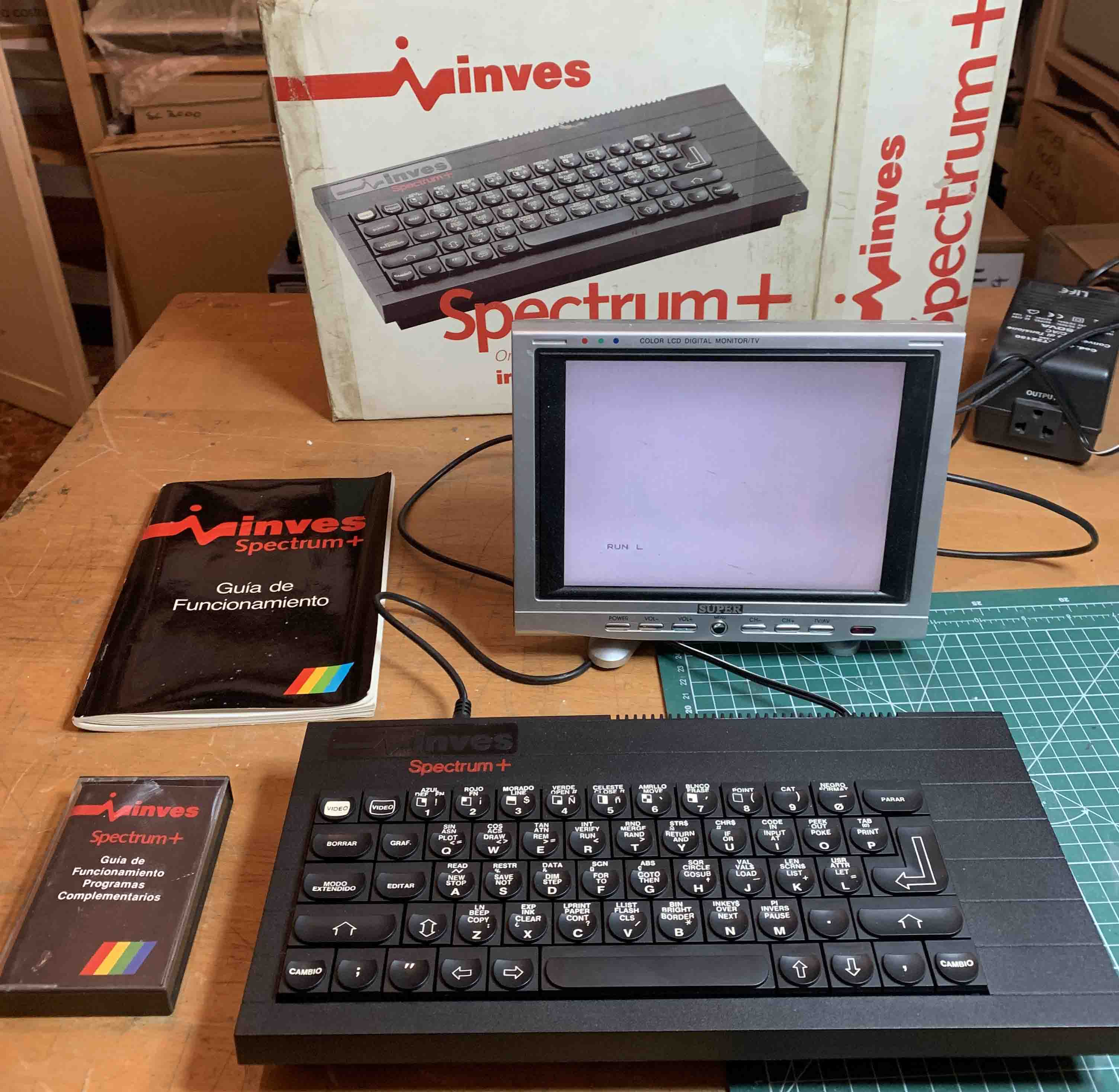 Spectrum Inves +. A clone of the ZX Spectrum+ developed by Investrónica in Spain in 1986, based on the work developed by Investrónica for the ZX Spectrum 128. Released just after Amstrad bought Sinclair Research Ltd, looked much like a normal 48+, but all the inner parts were redesigned. As the ROM was also modified, it has compatibility problems with some games (Bombjack, Commando, Top Gun, etc.).[1] On the rear there was a Kempston joystick connector.
Due to the fact that Invéstronica was the distributor of Sinclair's products in Spain, and because Amstrad already had its own exclusive distributor in Spain (Indescomp, later bought by Amstrad itself), in 1987 Amstrad sued Investrónica to stop the sale of the computer.[2] The court agreed with Amstrad, but the decision was not issued until 1991, when the computer was discontinued as the 8-bit computer market in Spain was dead in favor of 16-bit computers.
.jpg) THE Spectrum (2024) Relive the magic. A true masterpiece of extraordinary design, born to shine and deserve a place in an art gallery. Decorated in its iconic rainbow colors, this fun, eccentric, and extroverted machine rekindles the joy of simple, immediate games, bringing back that pure, spontaneous experience that modern gaming has slowly forgotten.With a timeless aesthetic and vibrant personality, The Spectrum is more than just an updated replica of the legendary 1980s home computer: it is a true interactive work of art, capable of offering everyone a nostalgic, exciting, and surprisingly contemporary gaming adventure.
THE Spectrum (2024) Relive the magic. A true masterpiece of extraordinary design, born to shine and deserve a place in an art gallery. Decorated in its iconic rainbow colors, this fun, eccentric, and extroverted machine rekindles the joy of simple, immediate games, bringing back that pure, spontaneous experience that modern gaming has slowly forgotten.With a timeless aesthetic and vibrant personality, The Spectrum is more than just an updated replica of the legendary 1980s home computer: it is a true interactive work of art, capable of offering everyone a nostalgic, exciting, and surprisingly contemporary gaming adventure.
Here it is on display at the World Chili Fair 2025
48 built-in games
Contains the best genre defining ZX Spectrum games, such as Manic Miner, Head Over Heels, Saboteur! Remastered, The Hobbit, Army Moves and The Great Escape.
Classic Mode
Switch to Classic Mode and dive into the full ZX Spectrum experience, complete with BASIC programming and virtual cassettes.
48K and 128K compatibility
Compatible with games for 48K to 128K ZX Spectrum models.
Save your progress
Save your progress in one of four save-game slots per game, and return at any time.
Rewind mode
Rewind your gameplay at any time by up to 40 seconds to help you get through those difficult levels!
Extended colours
Supports the ULAplus™ colour mode for richer colour palettes that can be applied to any game.
Load your own
Load and play the programs you already own, optionally with the cassette loading effects you remember.
Display frames
Surround your gameplay with one of 12 attractive frames.
HDMI
High Definition output at 720p 50 or 60Hz.
Four USB ports
Four USB ports support the connection of joysticks, gamepads and USB sticks.
Compatible with game controllers
Compatible with many USB game controllers.
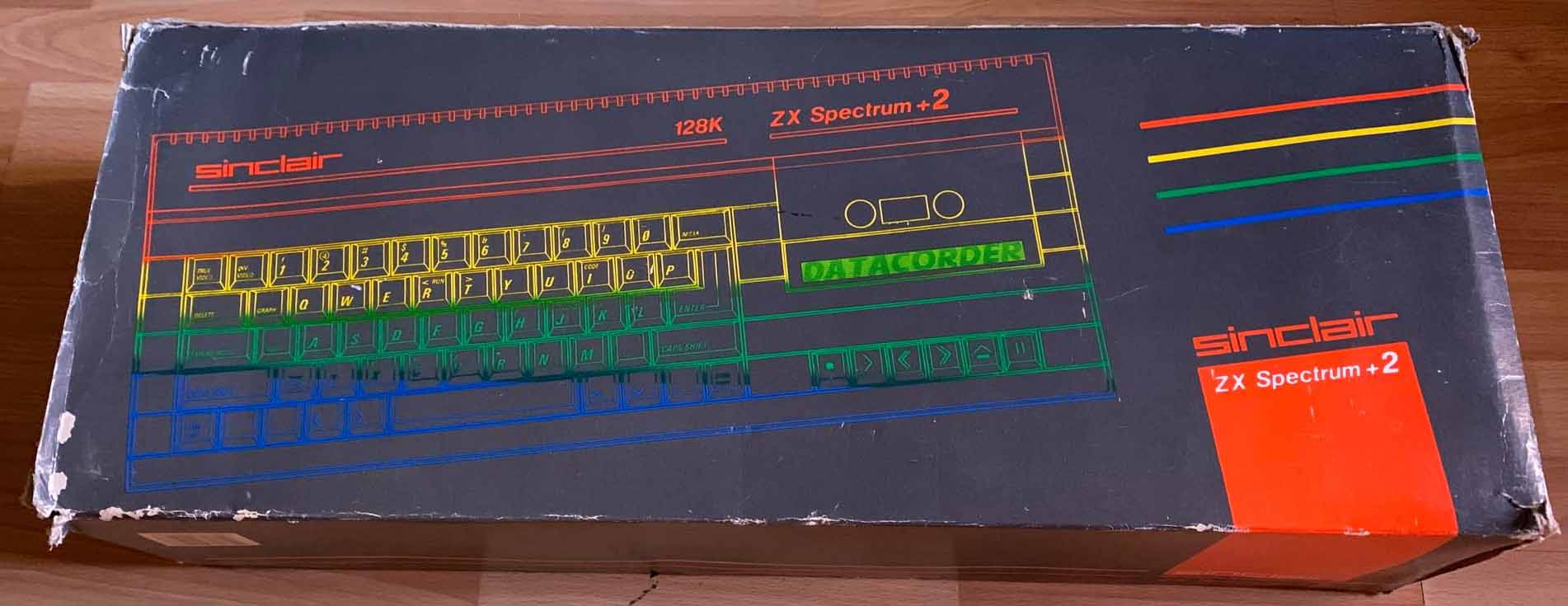
The ZX Spectrum +2 (UK: /zɛdɛks/) is an 8-bit personal home computer developed by Sinclair Research. It was first released in the United Kingdom on 23 April 1982 and went on to become Britain's best selling microcomputer.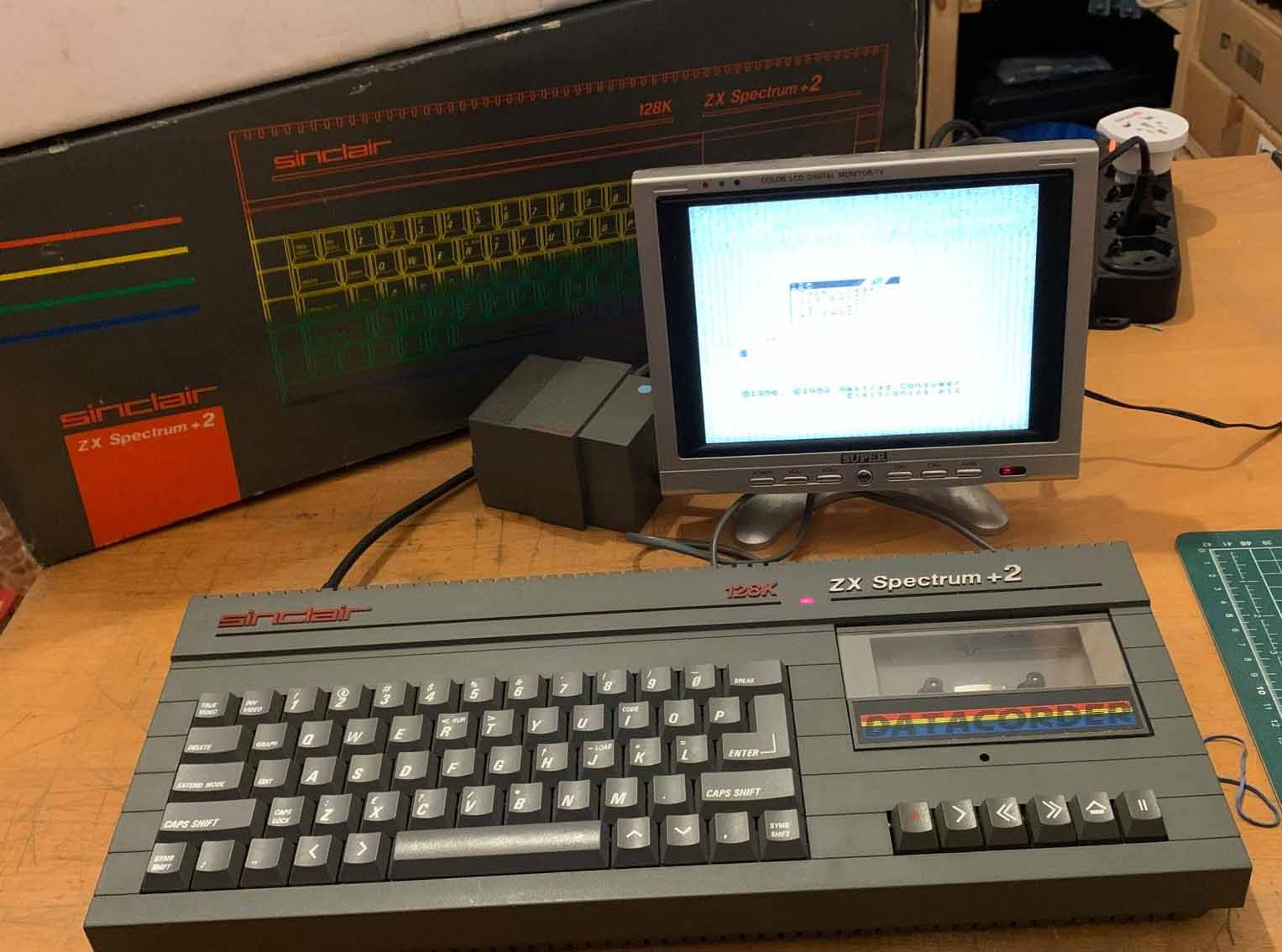
Referred to during development as the ZX81 Colour and ZX82, it was launched as the ZX Spectrum to highlight the machine's colour display, compared with the black and white display of its predecessor, the ZX81. The Spectrum was released as eight different models, ranging from the entry level with 16 KB RAM released in 1982 to the ZX Spectrum +3 with 128 KB RAM and built in floppy disk drive in 1987; altogether they sold over 5 million units worldwide (not counting unofficial clones).
The Spectrum was among the first home computers in the UK aimed at a mainstream audience, similar in significance to the Commodore 64 in the US or the MO5 in France. The introduction of the ZX Spectrum led to a boom in companies producing software and hardware for the machine, the effects of which are still seen. Some credit it as the machine which launched the UK IT industry. Licensing deals and clones followed, earning Clive Sinclair a knighthood for services to British industry.


.jpg "Core Module Watch")



.jpg "APPLE")
.jpg "Calculator Fuller")

.jpg "Console / Games")
.jpg "Olivetti Valentine")
.jpg "Battle Star Galactica")


.png)